What is DTF printing?
What the video says
What is DTF printing? Four steps, start to finish.
Your design prints onto a special film, then gets coated in hot-melt adhesive powder.
Cure it, then heat-press it onto virtually any fabric. Cotton, polyester, blends and more.
Everything you need in one place. Shop dtfpapercompany.com.
Direct-to-Film (DTF) printing is a transfer method that lets you print full-color designs onto a special PET film, coat them with hot-melt adhesive powder, cure them, and heat-press them onto almost any fabric. Unlike direct-to-garment (DTG), DTF doesn’t need pre-treatment and isn’t limited to cotton.
How DTF printing works
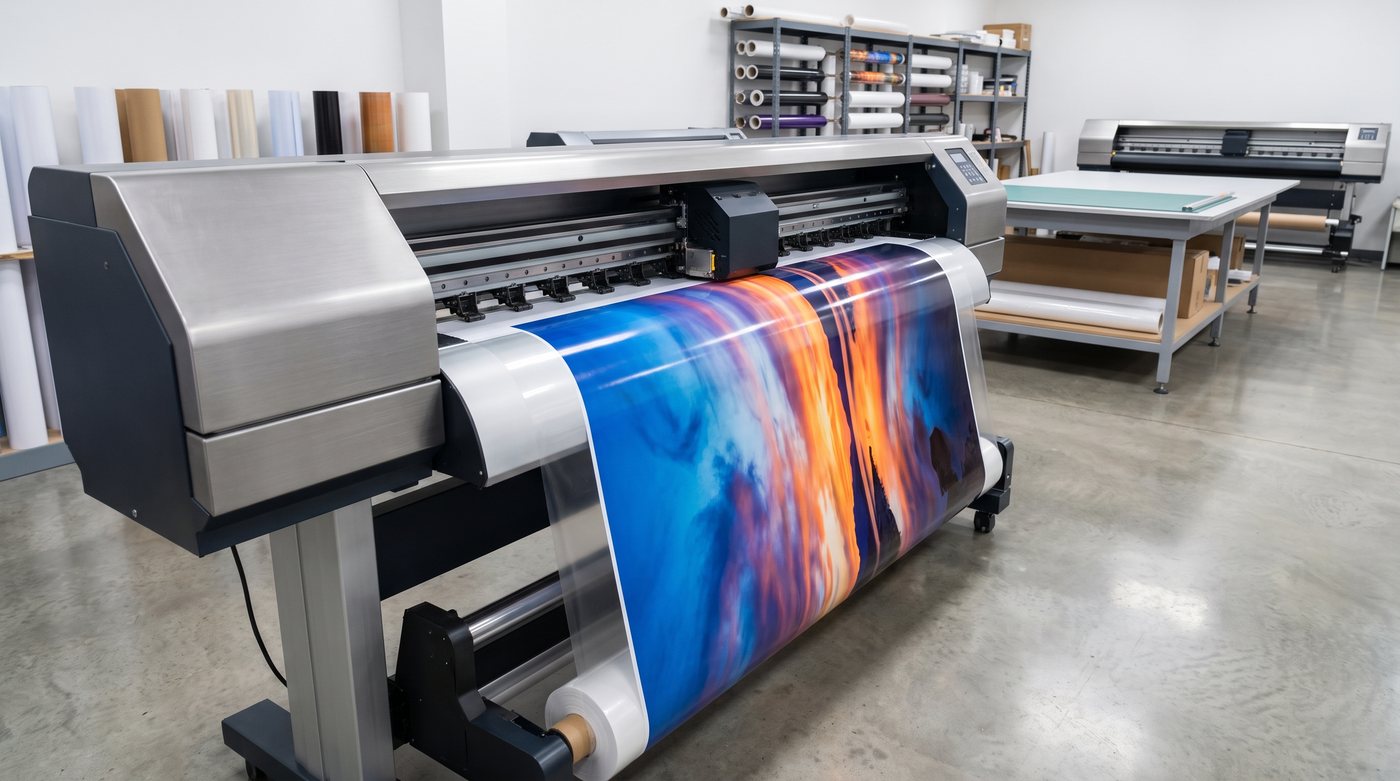
- Print your design (in reverse) onto DTF film using CMYK + white ink.
- Powder the wet print with hot-melt adhesive so it sticks to the fabric.
- Cure the powder in an oven or under a heat press until it melts.
- Press the transfer onto your garment, peel, and you’re done.
Why print shops love it
DTF works on cotton, polyester, blends, nylon, leather and more — light or dark. There’s no weeding, no minimums, and the prints are soft, vibrant, and washable. It’s one of the most flexible, cost-effective ways to decorate apparel today.
Understanding DTF inks
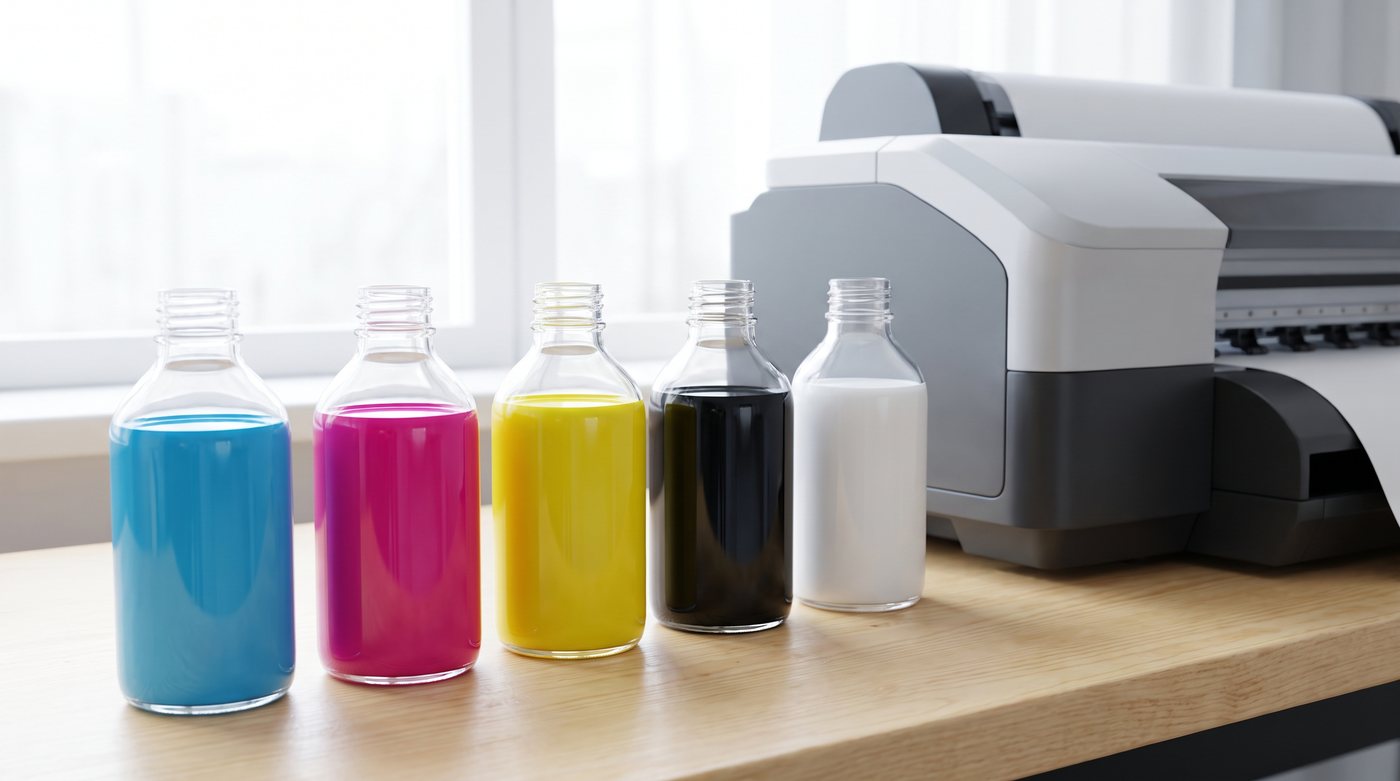
DTF uses water-based pigment inks in five channels: Cyan, Magenta, Yellow, Black, and White. The CMYK inks build your full-color image; the white ink lays down an opaque base so colors pop on dark garments.
- Color (CMYK): our Ultra Bright DTF Starr Inks are stable and forgiving — they give bright, accurate color and store well for about a year sealed.
- White (the important one): white ink carries heavy titanium-dioxide pigment that settles over time. If it isn’t kept moving, it separates, prints grey, and clogs the printhead. Shake sealed bottles before topping up, and agitate the printer’s white channel daily (our DTF Starr printers circulate it automatically).
- Print order matters: on dark fabric you print color first, then white behind it; the film is pressed image-side down so the white ends up hidden underneath.
Understanding DTF powder
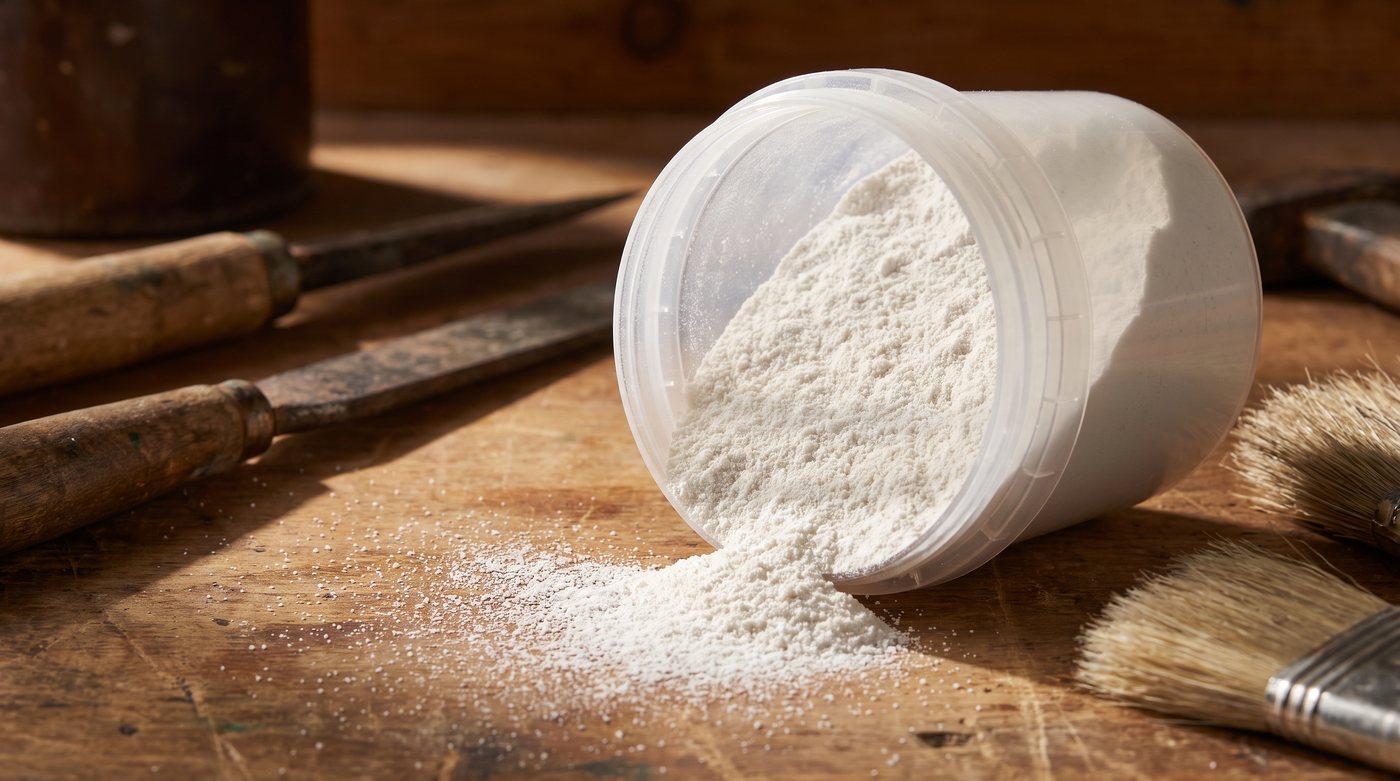
Hot-melt adhesive powder is what actually bonds your ink to the garment. You sprinkle it onto the freshly printed (still wet) film so it sticks only to the ink, shake off the excess, then cure it.
- Grades: fine powder gives the softest hand for detailed designs; medium works for most general apparel. Our Ultra Melt Smooth Powder is a smooth medium that suits nearly every job.
- Curing: the powder must fully melt — typically around 160°C for the recommended time — until it turns glossy and even. Under-cured powder looks matte and peels; over-cured powder gets brittle and cracks.
- Coverage: aim for a complete, even coat over the ink with no bare spots and no thick piles — both cause weak adhesion.
Maintenance basics
- Every day you print: agitate the white ink, run a nozzle check, and cap/park the printhead when you’re done so it doesn’t dry out.
- Keep it running: print at least a small maintenance swatch regularly — idle printers are where white-ink clogs start.
- Weekly: run a head-cleaning cycle and wipe the capping station.
- Store consumables cool, dark, dry, and sealed (10–30°C, 40–60% humidity). Reseal powder immediately and never let it absorb moisture.
- Rotate stock — oldest first — and note open dates so nothing expires in the cabinet.
What to watch out for
- Grey or thin whites: almost always settled/neglected white ink. Agitate, nozzle-check, and print a white swatch to confirm opacity.
- Clogged nozzles: caused by idle time, low humidity, or old ink. Print regularly and keep the shop around 50% RH.
- Peeling transfers: usually under-cured powder or uneven coverage — check your cure temperature, time, and press pressure.
- Clumpy powder: moisture damage. Keep it airtight.
- Mixing brands/chemistries: can react and clog — stick to one ink system.
Want the full detail on how long inks and powder last and how to store them? Read How Long Do DTF Inks & Powder Last?
New to DTF? Browse our supplies and printers or contact us for free guidance.